Browse ceramic glazes whose listed firing guidance includes Cone 6. Compare finishes and colors, then check each product to match its application and firing needs to your studio process.
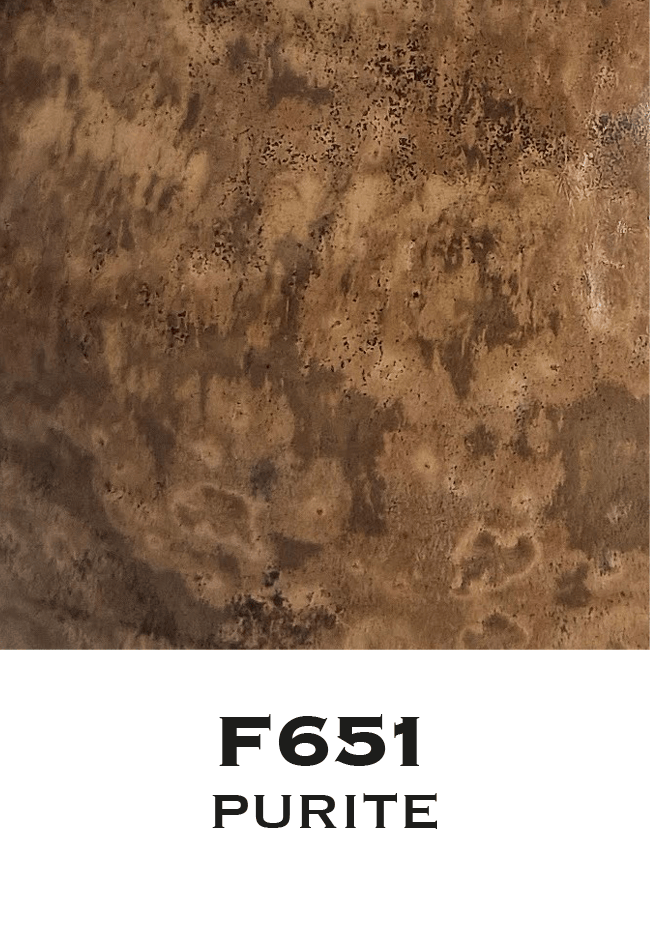
Crystal is a Studio Line crystalline collection that forms visible crystals in the fired glaze surface, so results vary from piece to piece. F651 Purite - Crystal Glaze adds crystalline pattern and variation to individual pieces or selected production work. The glaze can move during firing, and a Vibes top coat can add a glassy effect. Plan the base of the piece with that movement in mind.
Application
Stir well. Apply with a brush, sponge, or stamp in 2-3 coats, letting each coat dry before the next. Fewer coats near the base may help manage running. Use a glaze catcher when following a full crystalline firing schedule.
Firing and testing
Supplier guidance lists 1180-1280 degrees C, Cone 4-9, with a standard 1220 degrees C / Cone 6 firing and a 20-minute soak. Test F651 Purite - Crystal Glaze on your clay body before production.
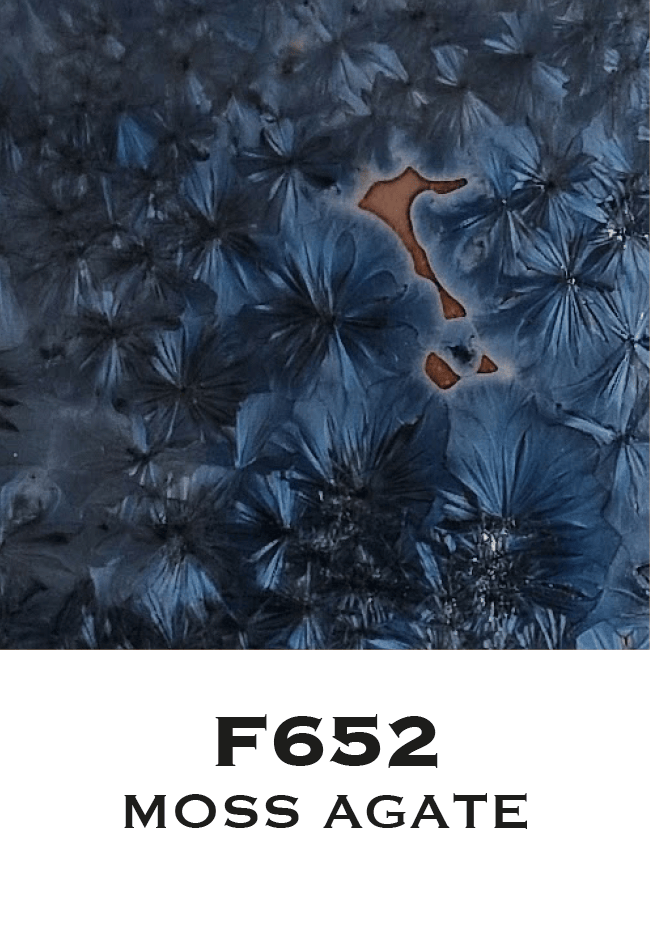
Crystal is a Studio Line crystalline collection that forms visible crystals in the fired glaze surface, so results vary from piece to piece. F652 Moss Agate - Crystal Glaze adds crystalline pattern and variation to individual pieces or selected production work. The glaze can move during firing, and a Vibes top coat can add a glassy effect. Plan the base of the piece with that movement in mind.
Application
Stir well. Apply with a brush, sponge, or stamp in 2-3 coats, letting each coat dry before the next. Fewer coats near the base may help manage running. Use a glaze catcher when following a full crystalline firing schedule.
Firing and testing
Supplier guidance lists 1180-1280 degrees C, Cone 4-9, with a standard 1220 degrees C / Cone 6 firing and a 20-minute soak. Test F652 Moss Agate - Crystal Glaze on your clay body before production.
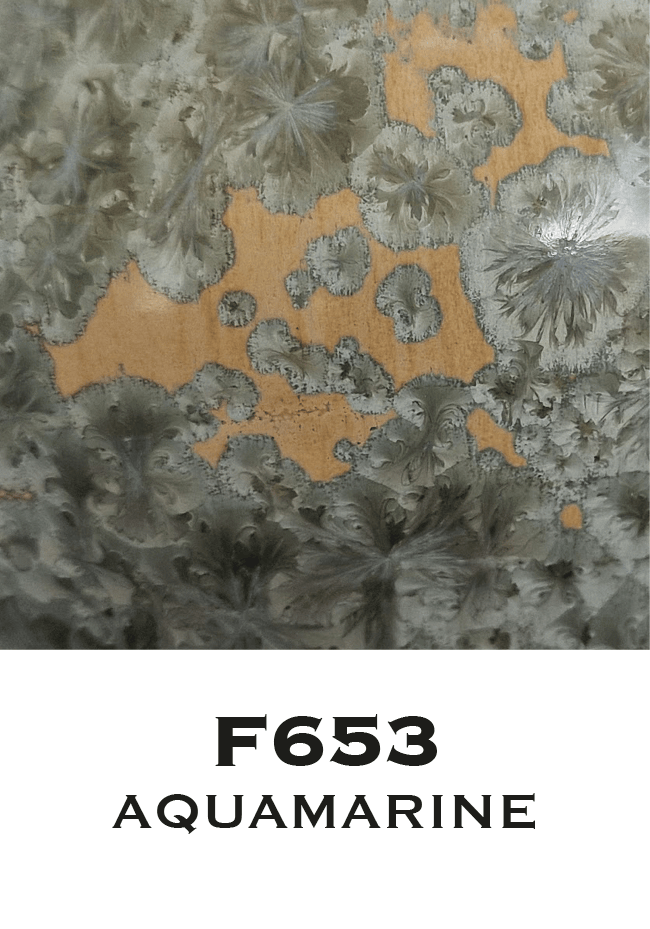
Crystal is a Studio Line crystalline collection that forms visible crystals in the fired glaze surface, so results vary from piece to piece. F653 Aquamarine - Crystal Glaze adds crystalline pattern and variation to individual pieces or selected production work. The glaze can move during firing, and a Vibes top coat can add a glassy effect. Plan the base of the piece with that movement in mind.
Application
Stir well. Apply with a brush, sponge, or stamp in 2-3 coats, letting each coat dry before the next. Fewer coats near the base may help manage running. Use a glaze catcher when following a full crystalline firing schedule.
Firing and testing
Supplier guidance lists 1180-1280 degrees C, Cone 4-9, with a standard 1220 degrees C / Cone 6 firing and a 20-minute soak. Test F653 Aquamarine - Crystal Glaze on your clay body before production.
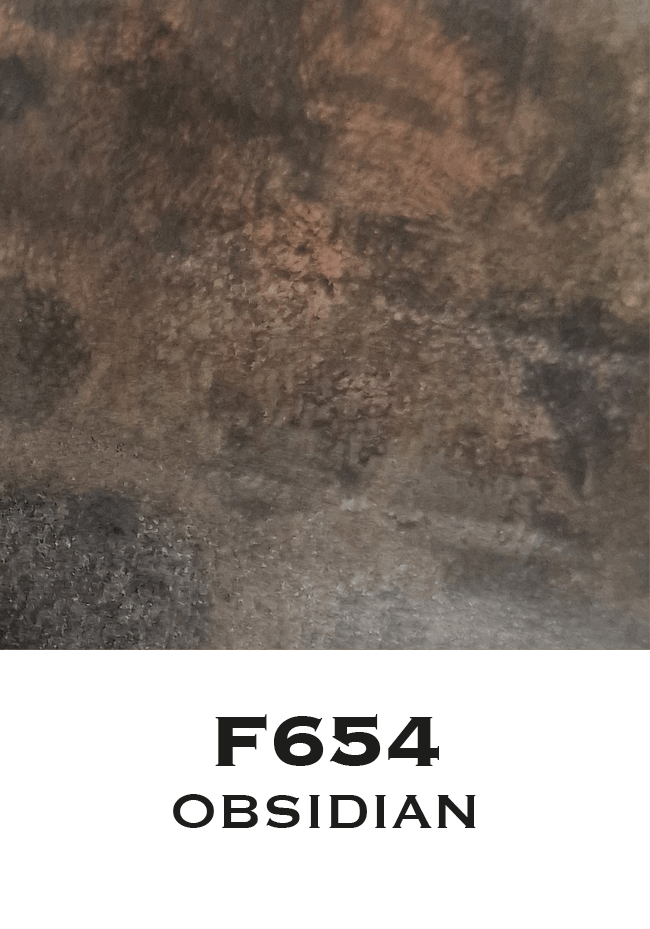
Crystal is a Studio Line crystalline collection that forms visible crystals in the fired glaze surface, so results vary from piece to piece. F654 Obsidian - Crystal Glaze adds crystalline pattern and variation to individual pieces or selected production work. The glaze can move during firing, and a Vibes top coat can add a glassy effect. Plan the base of the piece with that movement in mind.
Application
Stir well. Apply with a brush, sponge, or stamp in 2-3 coats, letting each coat dry before the next. Fewer coats near the base may help manage running. Use a glaze catcher when following a full crystalline firing schedule.
Firing and testing
Supplier guidance lists 1180-1280 degrees C, Cone 4-9, with a standard 1220 degrees C / Cone 6 firing and a 20-minute soak. Test F654 Obsidian - Crystal Glaze on your clay body before production.
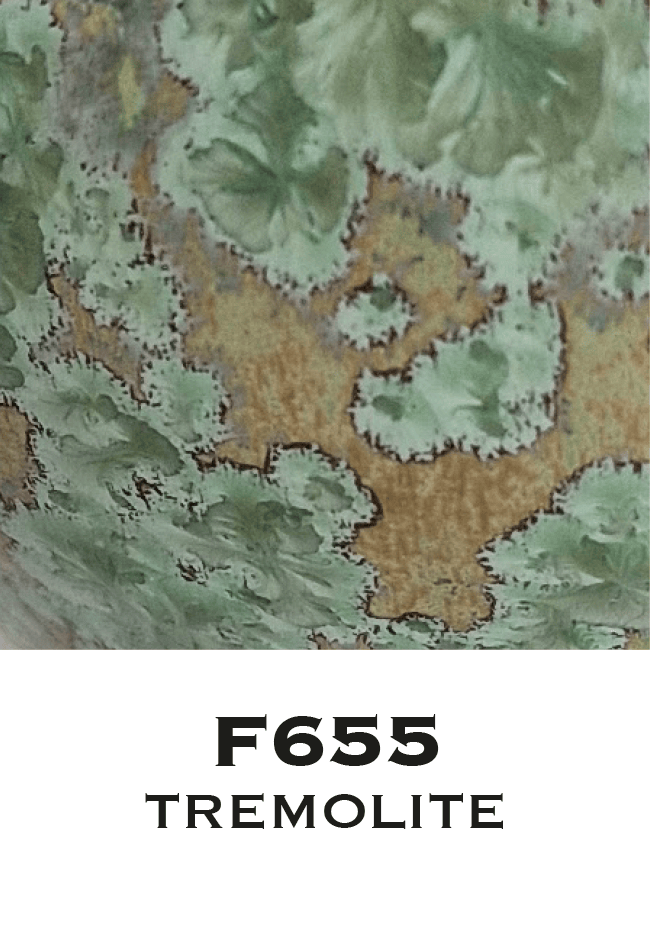
Crystal is a Studio Line crystalline collection that forms visible crystals in the fired glaze surface, so results vary from piece to piece. F655 Tremolite - Crystal Glaze adds crystalline pattern and variation to individual pieces or selected production work. The glaze can move during firing, and a Vibes top coat can add a glassy effect. Plan the base of the piece with that movement in mind.
Application
Stir well. Apply with a brush, sponge, or stamp in 2-3 coats, letting each coat dry before the next. Fewer coats near the base may help manage running. Use a glaze catcher when following a full crystalline firing schedule.
Firing and testing
Supplier guidance lists 1180-1280 degrees C, Cone 4-9, with a standard 1220 degrees C / Cone 6 firing and a 20-minute soak. Test F655 Tremolite - Crystal Glaze on your clay body before production.
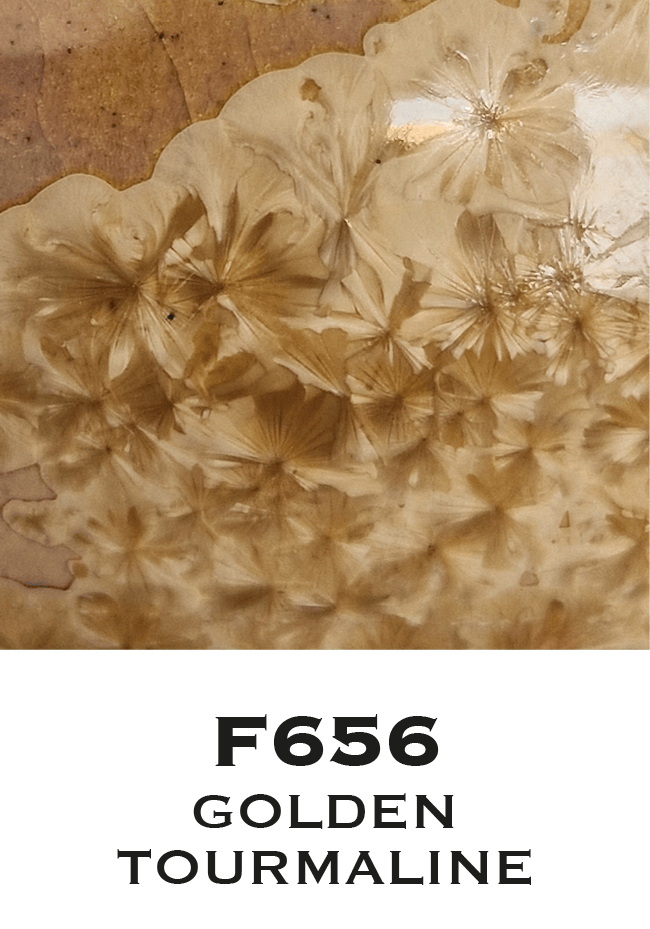
Crystal is a Studio Line crystalline collection that forms visible crystals in the fired glaze surface, so results vary from piece to piece. F656 Golden Tourmaline - Crystal Glaze adds crystalline pattern and variation to individual pieces or selected production work. The glaze can move during firing, and a Vibes top coat can add a glassy effect. Plan the base of the piece with that movement in mind.
Application
Stir well. Apply with a brush, sponge, or stamp in 2-3 coats, letting each coat dry before the next. Fewer coats near the base may help manage running. Use a glaze catcher when following a full crystalline firing schedule.
Firing and testing
Supplier guidance lists 1180-1280 degrees C, Cone 4-9, with a standard 1220 degrees C / Cone 6 firing and a 20-minute soak. Test F656 Golden Tourmaline - Crystal Glaze on your clay body before production.
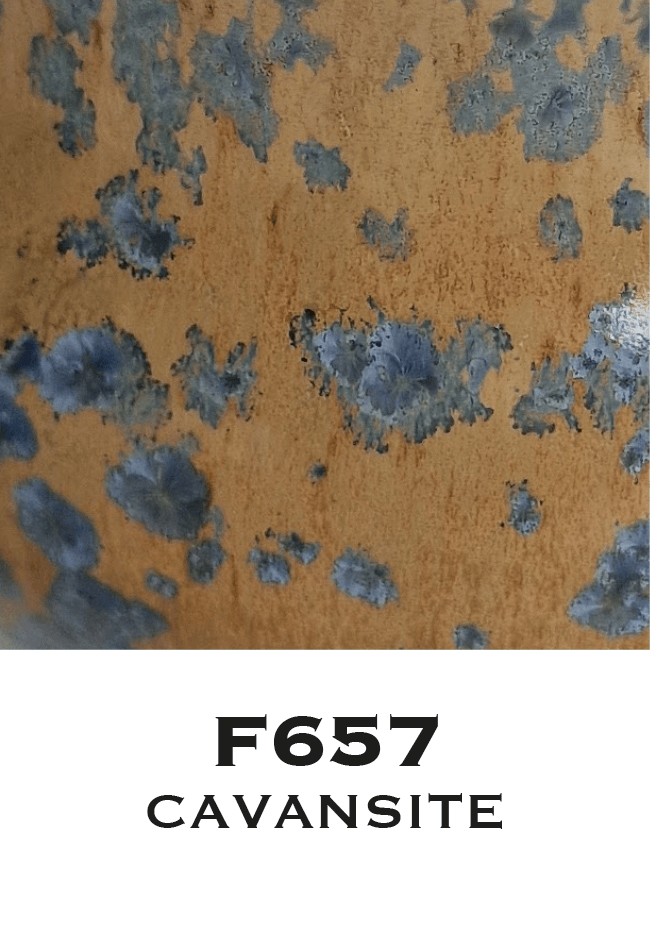
Crystal is a Studio Line crystalline collection that forms visible crystals in the fired glaze surface, so results vary from piece to piece. F657 Cavansite - Crystal Glaze adds crystalline pattern and variation to individual pieces or selected production work. The glaze can move during firing, and a Vibes top coat can add a glassy effect. Plan the base of the piece with that movement in mind.
Application
Stir well. Apply with a brush, sponge, or stamp in 2-3 coats, letting each coat dry before the next. Fewer coats near the base may help manage running. Use a glaze catcher when following a full crystalline firing schedule.
Firing and testing
Supplier guidance lists 1180-1280 degrees C, Cone 4-9, with a standard 1220 degrees C / Cone 6 firing and a 20-minute soak. Test F657 Cavansite - Crystal Glaze on your clay body before production.
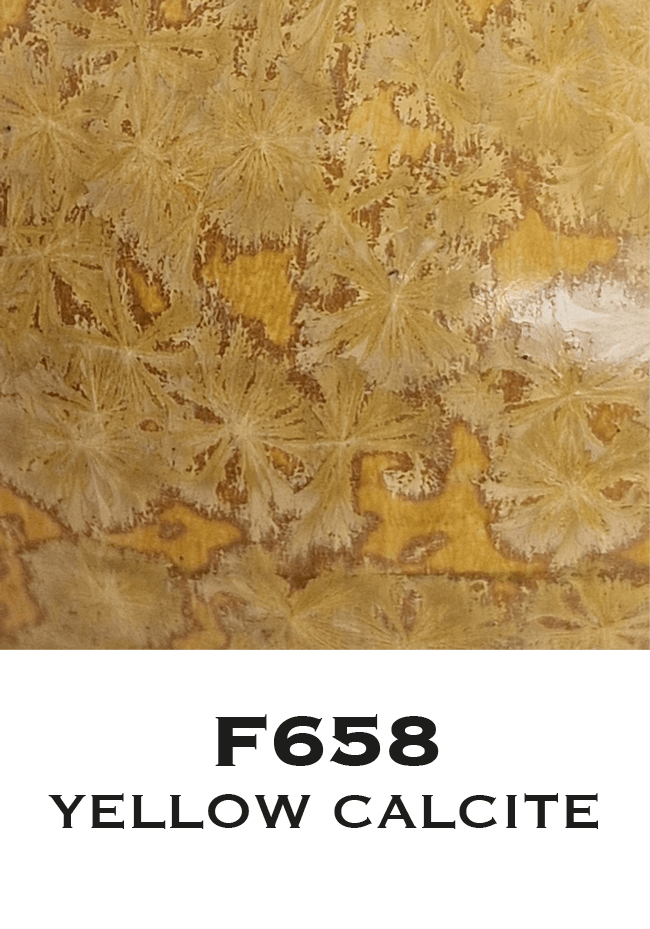
Crystal is a Studio Line crystalline collection that forms visible crystals in the fired glaze surface, so results vary from piece to piece. F658 Yellow Calcite - Crystal Glaze adds crystalline pattern and variation to individual pieces or selected production work. The glaze can move during firing, and a Vibes top coat can add a glassy effect. Plan the base of the piece with that movement in mind.
Application
Stir well. Apply with a brush, sponge, or stamp in 2-3 coats, letting each coat dry before the next. Fewer coats near the base may help manage running. Use a glaze catcher when following a full crystalline firing schedule.
Firing and testing
Supplier guidance lists 1180-1280 degrees C, Cone 4-9, with a standard 1220 degrees C / Cone 6 firing and a 20-minute soak. Test F658 Yellow Calcite - Crystal Glaze on your clay body before production.
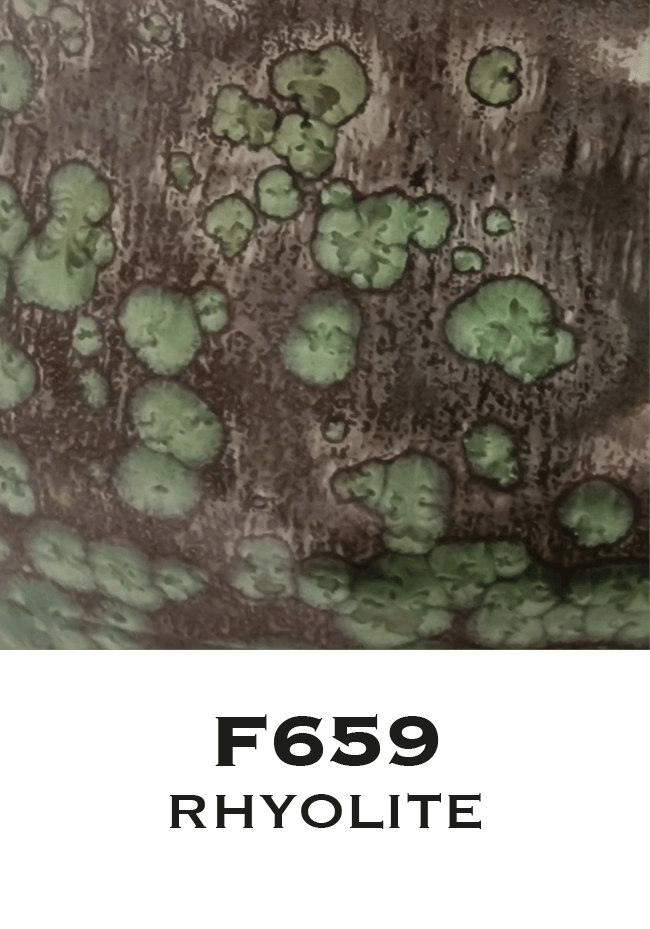
Crystal is a Studio Line crystalline collection that forms visible crystals in the fired glaze surface, so results vary from piece to piece. F659 Rhyolite - Crystal Glaze adds crystalline pattern and variation to individual pieces or selected production work. The glaze can move during firing, and a Vibes top coat can add a glassy effect. Plan the base of the piece with that movement in mind.
Application
Stir well. Apply with a brush, sponge, or stamp in 2-3 coats, letting each coat dry before the next. Fewer coats near the base may help manage running. Use a glaze catcher when following a full crystalline firing schedule.
Firing and testing
Supplier guidance lists 1180-1280 degrees C, Cone 4-9, with a standard 1220 degrees C / Cone 6 firing and a 20-minute soak. Test F659 Rhyolite - Crystal Glaze on your clay body before production.
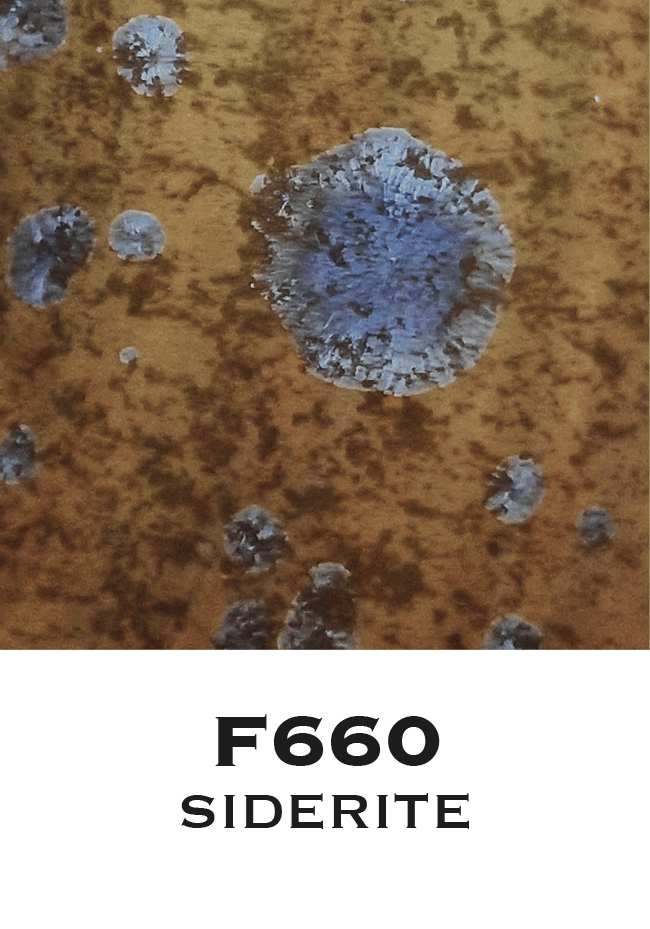
Crystal is a Studio Line crystalline collection that forms visible crystals in the fired glaze surface, so results vary from piece to piece. F660 Siderite - Crystal Glaze adds crystalline pattern and variation to individual pieces or selected production work. The glaze can move during firing, and a Vibes top coat can add a glassy effect. Plan the base of the piece with that movement in mind.
Application
Stir well. Apply with a brush, sponge, or stamp in 2-3 coats, letting each coat dry before the next. Fewer coats near the base may help manage running. Use a glaze catcher when following a full crystalline firing schedule.
Firing and testing
Supplier guidance lists 1180-1280 degrees C, Cone 4-9, with a standard 1220 degrees C / Cone 6 firing and a 20-minute soak. Test F660 Siderite - Crystal Glaze on your clay body before production.
Cone 6 is a starting point for comparison
This group brings together glazes with supplier firing guidance that includes Cone 6. They do not all produce the same surface or require the same schedule. A matte, transparent or crystalline glaze may need different application and firing choices even when grouped at the same cone.
Check more than the target temperature
Read each product's notes for recommended coats, soaking guidance and glaze movement. Heatwork depends on time as well as temperature; test on the clay body and kiln schedule you intend to use.