Explore glazes that develop crystal formations during firing. Compare the Crystal collection below, then review the firing and application notes to plan a test piece.
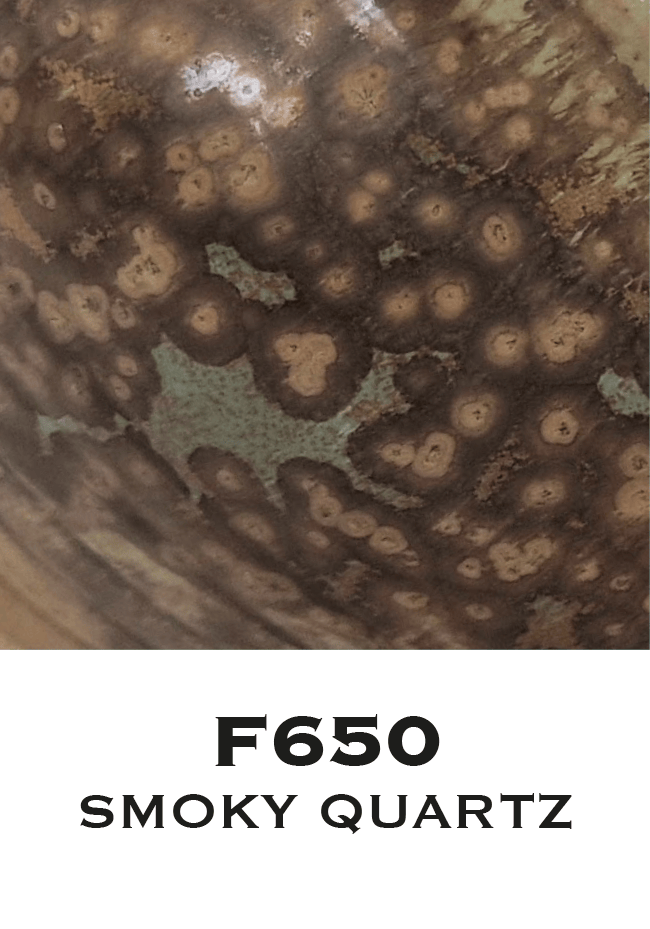
Crystal is a Studio Line crystalline collection that forms visible crystals in the fired glaze surface, so results vary from piece to piece. F650 Smoky Quartz - Crystal Glaze adds crystalline pattern and variation to individual pieces or selected production work. The glaze can move during firing, and a Vibes top coat can add a glassy effect. Plan the base of the piece with that movement in mind.
Application
Stir well. Apply with a brush, sponge, or stamp in 2-3 coats, letting each coat dry before the next. Fewer coats near the base may help manage running. Use a glaze catcher when following a full crystalline firing schedule.
Firing and testing
Supplier guidance lists 1180-1280 degrees C, Cone 4-9, with a standard 1220 degrees C / Cone 6 firing and a 20-minute soak. Test F650 Smoky Quartz - Crystal Glaze on your clay body before production.
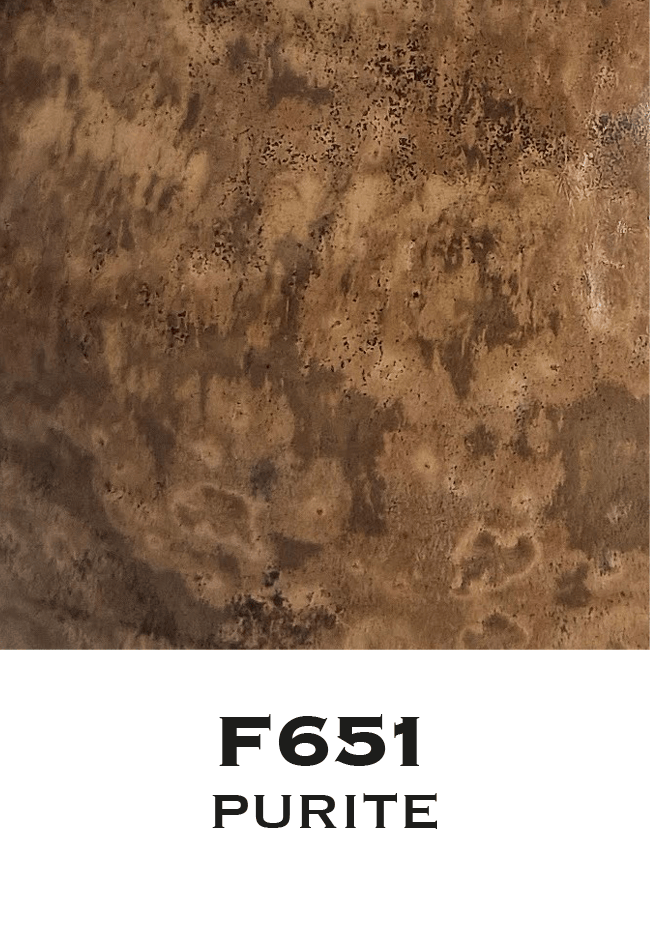
Crystal is a Studio Line crystalline collection that forms visible crystals in the fired glaze surface, so results vary from piece to piece. F651 Purite - Crystal Glaze adds crystalline pattern and variation to individual pieces or selected production work. The glaze can move during firing, and a Vibes top coat can add a glassy effect. Plan the base of the piece with that movement in mind.
Application
Stir well. Apply with a brush, sponge, or stamp in 2-3 coats, letting each coat dry before the next. Fewer coats near the base may help manage running. Use a glaze catcher when following a full crystalline firing schedule.
Firing and testing
Supplier guidance lists 1180-1280 degrees C, Cone 4-9, with a standard 1220 degrees C / Cone 6 firing and a 20-minute soak. Test F651 Purite - Crystal Glaze on your clay body before production.
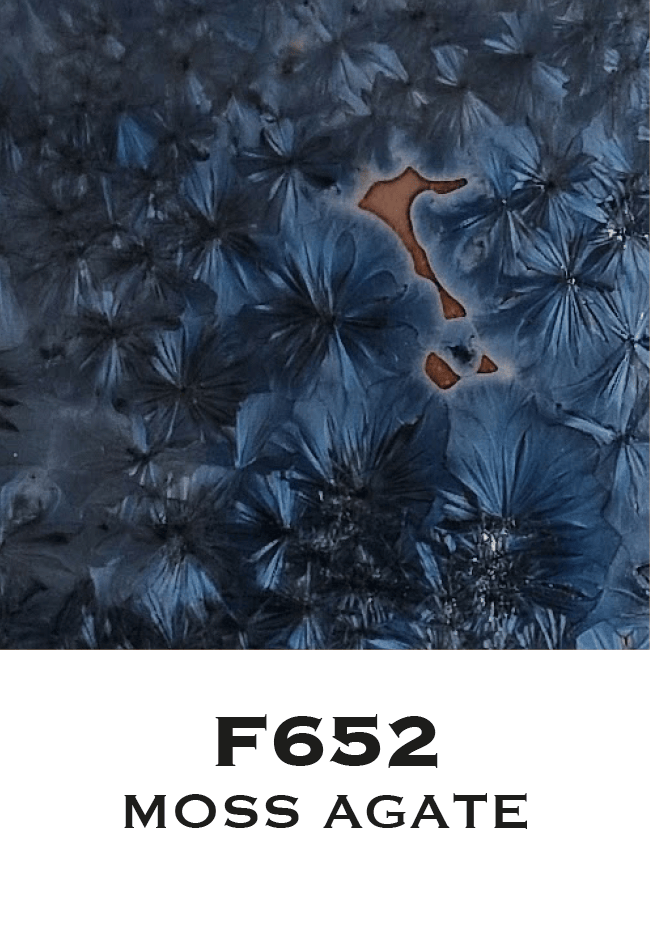
Crystal is a Studio Line crystalline collection that forms visible crystals in the fired glaze surface, so results vary from piece to piece. F652 Moss Agate - Crystal Glaze adds crystalline pattern and variation to individual pieces or selected production work. The glaze can move during firing, and a Vibes top coat can add a glassy effect. Plan the base of the piece with that movement in mind.
Application
Stir well. Apply with a brush, sponge, or stamp in 2-3 coats, letting each coat dry before the next. Fewer coats near the base may help manage running. Use a glaze catcher when following a full crystalline firing schedule.
Firing and testing
Supplier guidance lists 1180-1280 degrees C, Cone 4-9, with a standard 1220 degrees C / Cone 6 firing and a 20-minute soak. Test F652 Moss Agate - Crystal Glaze on your clay body before production.
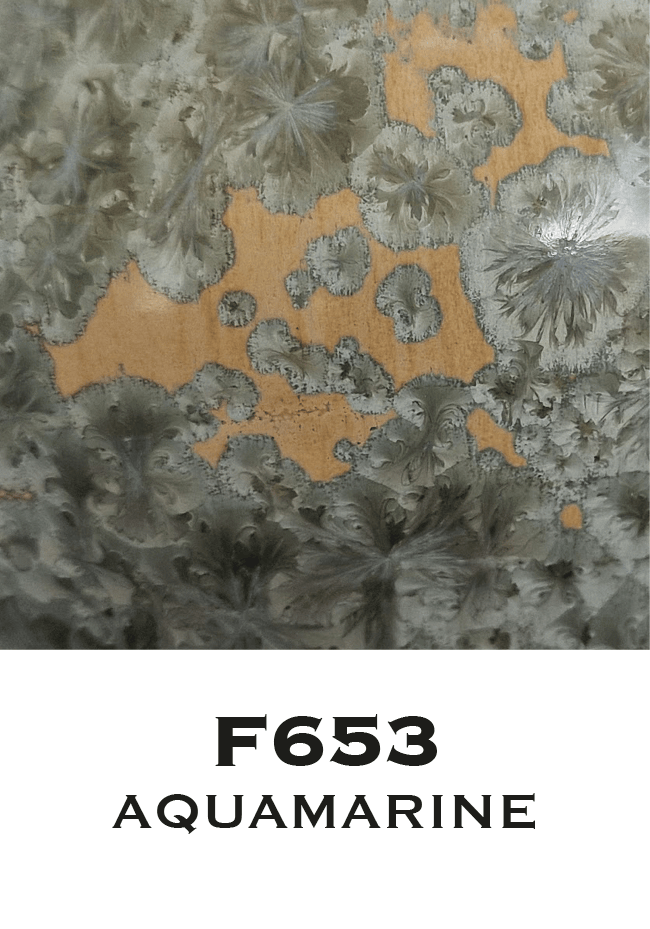
Crystal is a Studio Line crystalline collection that forms visible crystals in the fired glaze surface, so results vary from piece to piece. F653 Aquamarine - Crystal Glaze adds crystalline pattern and variation to individual pieces or selected production work. The glaze can move during firing, and a Vibes top coat can add a glassy effect. Plan the base of the piece with that movement in mind.
Application
Stir well. Apply with a brush, sponge, or stamp in 2-3 coats, letting each coat dry before the next. Fewer coats near the base may help manage running. Use a glaze catcher when following a full crystalline firing schedule.
Firing and testing
Supplier guidance lists 1180-1280 degrees C, Cone 4-9, with a standard 1220 degrees C / Cone 6 firing and a 20-minute soak. Test F653 Aquamarine - Crystal Glaze on your clay body before production.
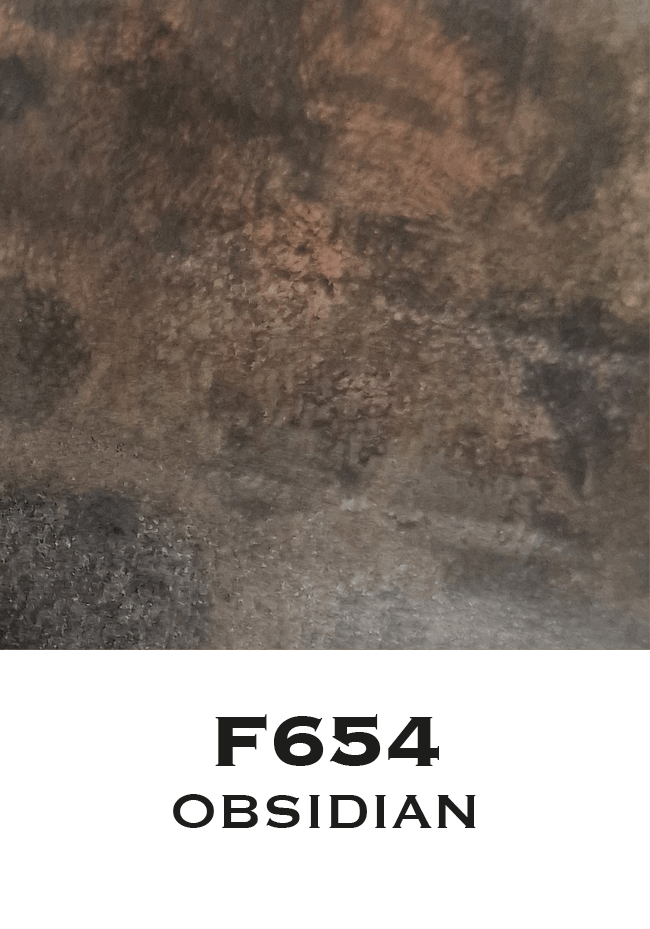
Crystal is a Studio Line crystalline collection that forms visible crystals in the fired glaze surface, so results vary from piece to piece. F654 Obsidian - Crystal Glaze adds crystalline pattern and variation to individual pieces or selected production work. The glaze can move during firing, and a Vibes top coat can add a glassy effect. Plan the base of the piece with that movement in mind.
Application
Stir well. Apply with a brush, sponge, or stamp in 2-3 coats, letting each coat dry before the next. Fewer coats near the base may help manage running. Use a glaze catcher when following a full crystalline firing schedule.
Firing and testing
Supplier guidance lists 1180-1280 degrees C, Cone 4-9, with a standard 1220 degrees C / Cone 6 firing and a 20-minute soak. Test F654 Obsidian - Crystal Glaze on your clay body before production.
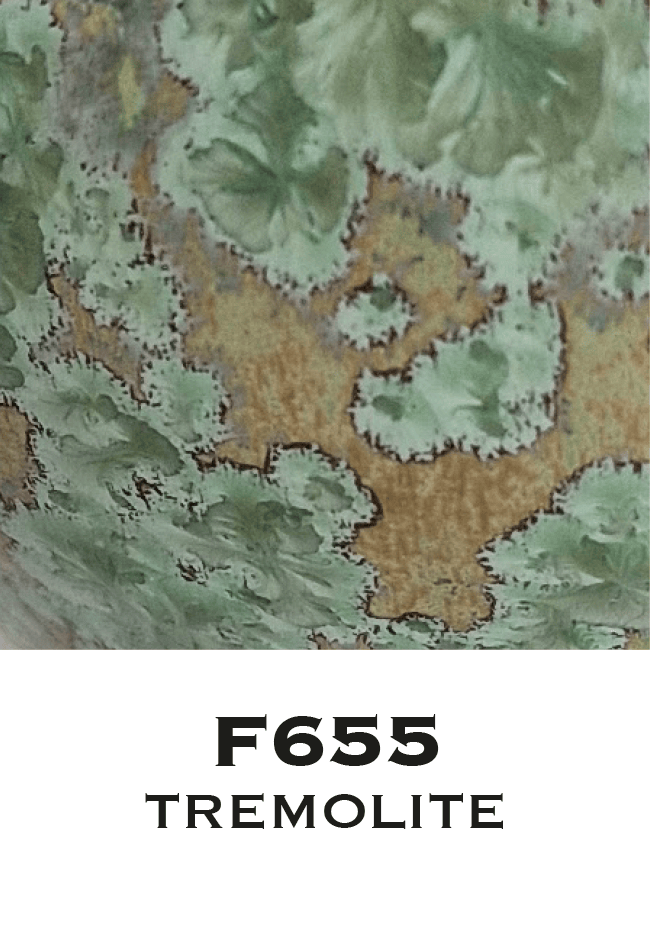
Crystal is a Studio Line crystalline collection that forms visible crystals in the fired glaze surface, so results vary from piece to piece. F655 Tremolite - Crystal Glaze adds crystalline pattern and variation to individual pieces or selected production work. The glaze can move during firing, and a Vibes top coat can add a glassy effect. Plan the base of the piece with that movement in mind.
Application
Stir well. Apply with a brush, sponge, or stamp in 2-3 coats, letting each coat dry before the next. Fewer coats near the base may help manage running. Use a glaze catcher when following a full crystalline firing schedule.
Firing and testing
Supplier guidance lists 1180-1280 degrees C, Cone 4-9, with a standard 1220 degrees C / Cone 6 firing and a 20-minute soak. Test F655 Tremolite - Crystal Glaze on your clay body before production.
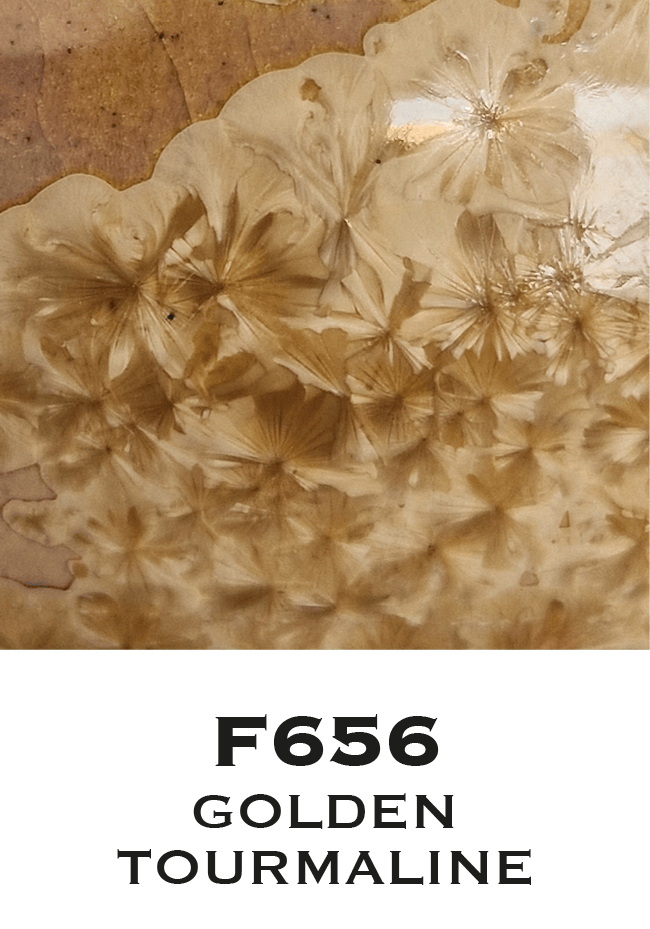
Crystal is a Studio Line crystalline collection that forms visible crystals in the fired glaze surface, so results vary from piece to piece. F656 Golden Tourmaline - Crystal Glaze adds crystalline pattern and variation to individual pieces or selected production work. The glaze can move during firing, and a Vibes top coat can add a glassy effect. Plan the base of the piece with that movement in mind.
Application
Stir well. Apply with a brush, sponge, or stamp in 2-3 coats, letting each coat dry before the next. Fewer coats near the base may help manage running. Use a glaze catcher when following a full crystalline firing schedule.
Firing and testing
Supplier guidance lists 1180-1280 degrees C, Cone 4-9, with a standard 1220 degrees C / Cone 6 firing and a 20-minute soak. Test F656 Golden Tourmaline - Crystal Glaze on your clay body before production.
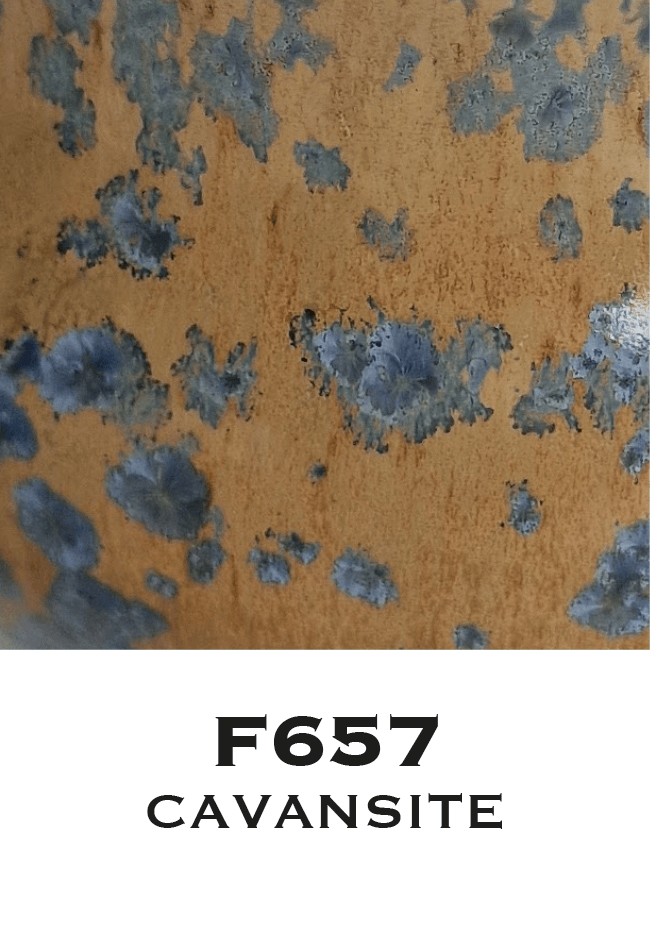
Crystal is a Studio Line crystalline collection that forms visible crystals in the fired glaze surface, so results vary from piece to piece. F657 Cavansite - Crystal Glaze adds crystalline pattern and variation to individual pieces or selected production work. The glaze can move during firing, and a Vibes top coat can add a glassy effect. Plan the base of the piece with that movement in mind.
Application
Stir well. Apply with a brush, sponge, or stamp in 2-3 coats, letting each coat dry before the next. Fewer coats near the base may help manage running. Use a glaze catcher when following a full crystalline firing schedule.
Firing and testing
Supplier guidance lists 1180-1280 degrees C, Cone 4-9, with a standard 1220 degrees C / Cone 6 firing and a 20-minute soak. Test F657 Cavansite - Crystal Glaze on your clay body before production.
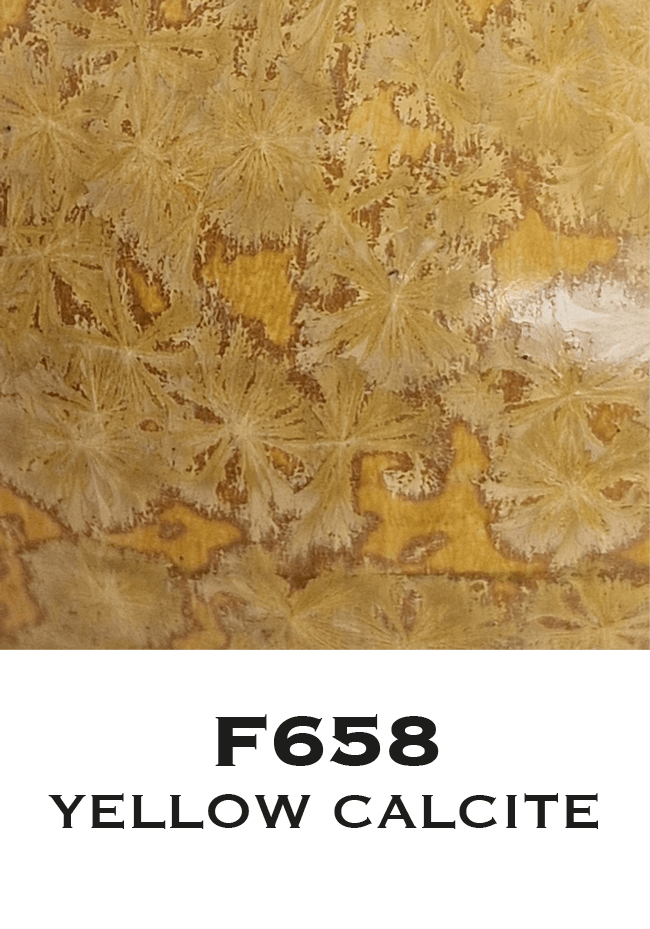
Crystal is a Studio Line crystalline collection that forms visible crystals in the fired glaze surface, so results vary from piece to piece. F658 Yellow Calcite - Crystal Glaze adds crystalline pattern and variation to individual pieces or selected production work. The glaze can move during firing, and a Vibes top coat can add a glassy effect. Plan the base of the piece with that movement in mind.
Application
Stir well. Apply with a brush, sponge, or stamp in 2-3 coats, letting each coat dry before the next. Fewer coats near the base may help manage running. Use a glaze catcher when following a full crystalline firing schedule.
Firing and testing
Supplier guidance lists 1180-1280 degrees C, Cone 4-9, with a standard 1220 degrees C / Cone 6 firing and a 20-minute soak. Test F658 Yellow Calcite - Crystal Glaze on your clay body before production.
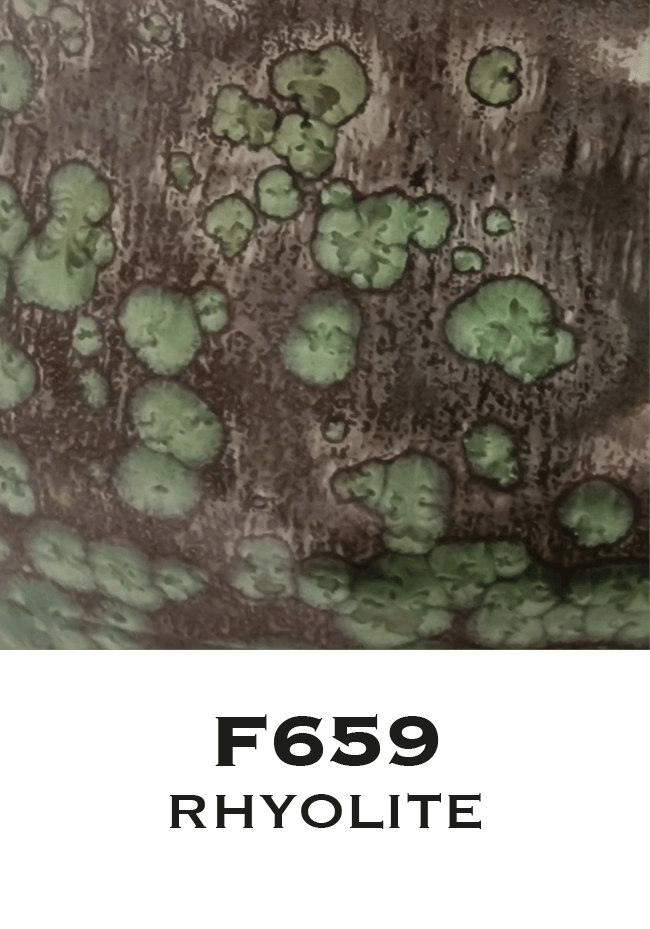
Crystal is a Studio Line crystalline collection that forms visible crystals in the fired glaze surface, so results vary from piece to piece. F659 Rhyolite - Crystal Glaze adds crystalline pattern and variation to individual pieces or selected production work. The glaze can move during firing, and a Vibes top coat can add a glassy effect. Plan the base of the piece with that movement in mind.
Application
Stir well. Apply with a brush, sponge, or stamp in 2-3 coats, letting each coat dry before the next. Fewer coats near the base may help manage running. Use a glaze catcher when following a full crystalline firing schedule.
Firing and testing
Supplier guidance lists 1180-1280 degrees C, Cone 4-9, with a standard 1220 degrees C / Cone 6 firing and a 20-minute soak. Test F659 Rhyolite - Crystal Glaze on your clay body before production.
Crystal formations make each surface individual
Crystal glazes develop crystals within the glaze surface during firing, so pieces can vary. Supplier guidance describes a 1220 degrees C / Cone 6 firing with a 20-minute soak as a starting point; more complex schedules can encourage further crystal growth. Always check the individual product guidance.
Plan for application and runoff
Stir well and brush, sponge or stamp on 2-3 coats, drying between coats. These glazes can run: fewer coats near the base may be appropriate, and the supplier recommends a glaze catcher for a full crystalline firing schedule.
A Vibes top coat can create a glassy effect. Test glaze combinations, coat thickness and firing schedules on your clay before committing finished work.