Browse ceramic glazes whose listed firing guidance includes Cone 6. Compare finishes and colors, then check each product to match its application and firing needs to your studio process.
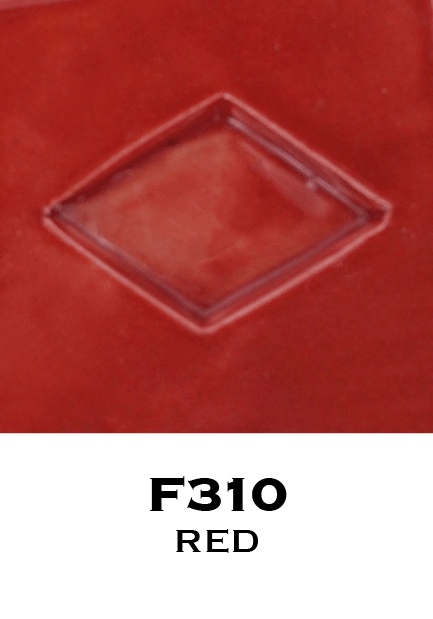
F310 Red is the red color in the Bright collection of glossy ceramic glazes.
Application
Stir well. Apply with a brush, sponge, or stamp in 2-3 coats, allowing each coat to dry before the next. Record the clay body, coat count, and combinations when testing a studio process.
Firing and testing
Supplier guidance lists 1180-1280 degrees C, Cone 4-9. Test F310 Red - Bright Glaze on your clay body before production and compare the fired surface at the temperature and thickness you plan to use.
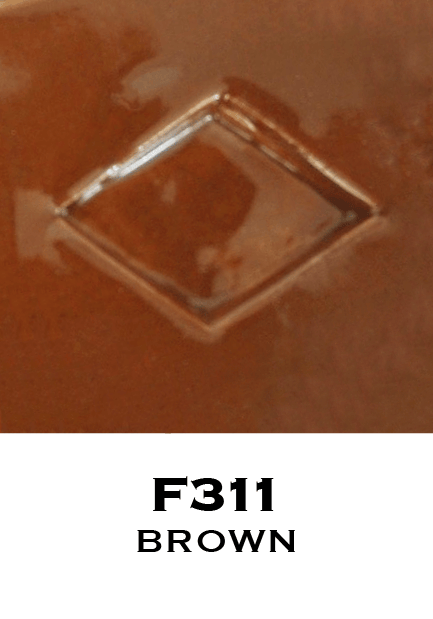
F311 Brown is the brown option in Studio Line's glossy Bright range for stoneware and porcelain.
Application
Stir well. Apply with a brush, sponge, or stamp in 2-3 coats, allowing each coat to dry before the next. Record the clay body, coat count, and combinations when testing a studio process.
Firing and testing
Supplier guidance lists 1180-1280 degrees C, Cone 4-9. Test F311 Brown - Bright Glaze on your clay body before production and compare the fired surface at the temperature and thickness you plan to use.
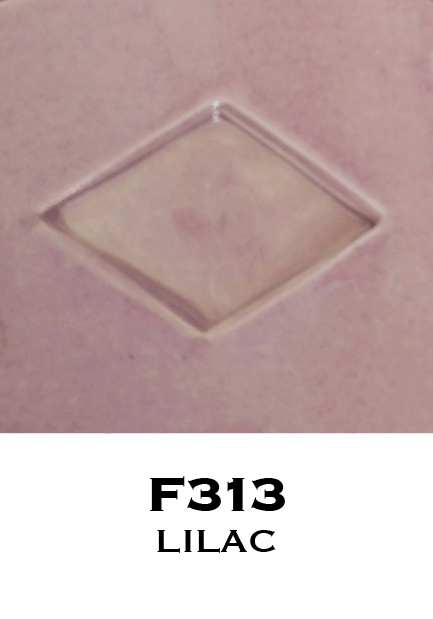
F313 Lilac is the lilac color in the Bright collection. It has its own SKU and swatch, separate from F314 Purple.
Application
Stir well. Apply with a brush, sponge, or stamp in 2-3 coats, allowing each coat to dry before the next. Record the clay body, coat count, and combinations when testing a studio process.
Firing and testing
Supplier guidance lists 1180-1280 degrees C, Cone 4-9. Test F313 Lilac - Bright Glaze on your clay body before production and compare the fired surface at the temperature and thickness you plan to use.
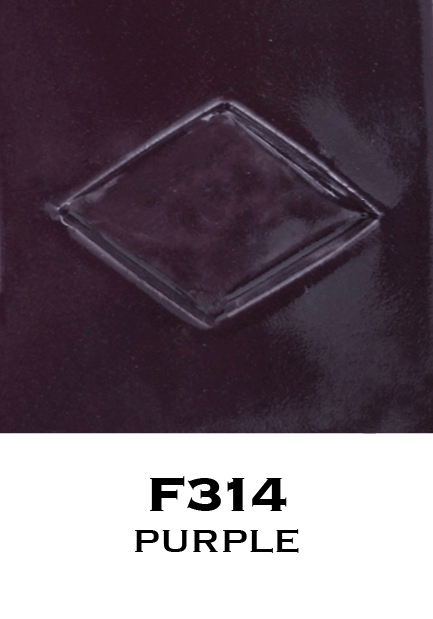
F314 Purple is the purple glaze in the glossy Bright range, listed separately from the collection's F313 Lilac.
Application
Stir well. Apply with a brush, sponge, or stamp in 2-3 coats, allowing each coat to dry before the next. Record the clay body, coat count, and combinations when testing a studio process.
Firing and testing
Supplier guidance lists 1180-1280 degrees C, Cone 4-9. Test F314 Purple - Bright Glaze on your clay body before production and compare the fired surface at the temperature and thickness you plan to use.
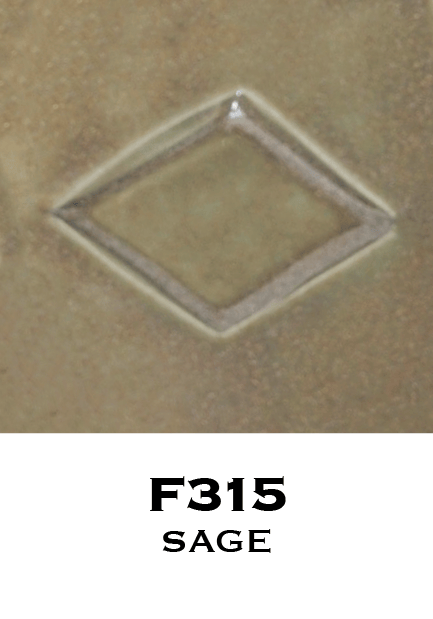
F315 Sage is the sage color in the Bright collection. Sage belongs to this glossy range, alongside Dark Green and Lime Green.
Application
Stir well. Apply with a brush, sponge, or stamp in 2-3 coats, allowing each coat to dry before the next. Record the clay body, coat count, and combinations when testing a studio process.
Firing and testing
Supplier guidance lists 1180-1280 degrees C, Cone 4-9. Test F315 Sage - Bright Glaze on your clay body before production and compare the fired surface at the temperature and thickness you plan to use.
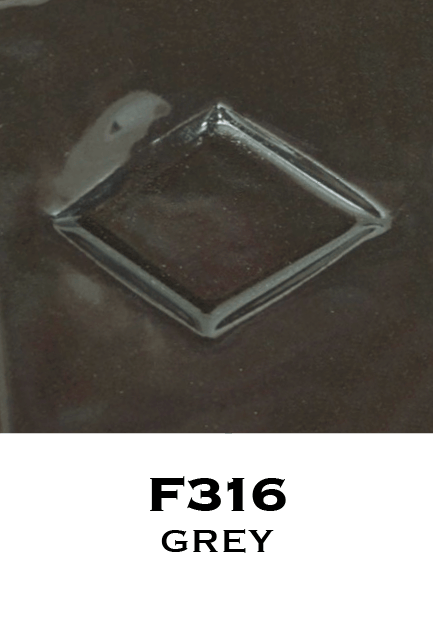
F316 Grey is the grey glaze in the Studio Line Bright collection, with the range's glossy finish.
Application
Stir well. Apply with a brush, sponge, or stamp in 2-3 coats, allowing each coat to dry before the next. Record the clay body, coat count, and combinations when testing a studio process.
Firing and testing
Supplier guidance lists 1180-1280 degrees C, Cone 4-9. Test F316 Grey - Bright Glaze on your clay body before production and compare the fired surface at the temperature and thickness you plan to use.
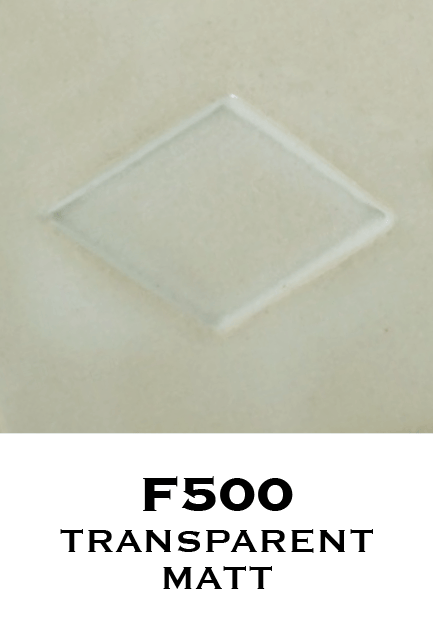
Matt gives the Studio Line palette a quiet, contemporary surface that lets the form and texture of a piece stay visible. F500 Transparent Matt - Matt Glaze can support independent artists, pottery studios, and ceramic businesses working on one-off pieces or repeatable collections. Pair Matt with Bright for contrast or a satin result; combining it with Vibes can introduce a reactive surface change. At the upper end of the stated range, the Matt surface may read more satin.
Application
Stir well. Apply with a brush, sponge, or stamp in 2-3 coats, allowing each coat to dry before the next. Keep notes on clay body, coat thickness, combinations, and firing when developing a repeatable studio test.
Firing and testing
Supplier guidance lists 1180-1280 degrees C, Cone 4-9. Test F500 Transparent Matt - Matt Glaze on your clay body before production, including the temperature you intend to use.
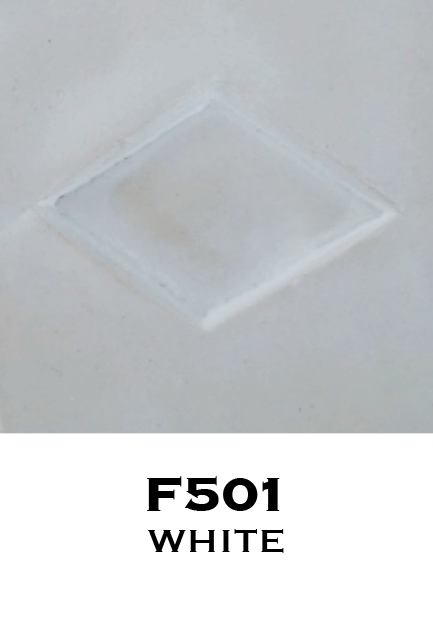
Matt gives the Studio Line palette a quiet, contemporary surface that lets the form and texture of a piece stay visible. F501 White - Matt Glaze can support independent artists, pottery studios, and ceramic businesses working on one-off pieces or repeatable collections. Pair Matt with Bright for contrast or a satin result; combining it with Vibes can introduce a reactive surface change. At the upper end of the stated range, the Matt surface may read more satin.
Application
Stir well. Apply with a brush, sponge, or stamp in 2-3 coats, allowing each coat to dry before the next. Keep notes on clay body, coat thickness, combinations, and firing when developing a repeatable studio test.
Firing and testing
Supplier guidance lists 1180-1280 degrees C, Cone 4-9. Test F501 White - Matt Glaze on your clay body before production, including the temperature you intend to use.
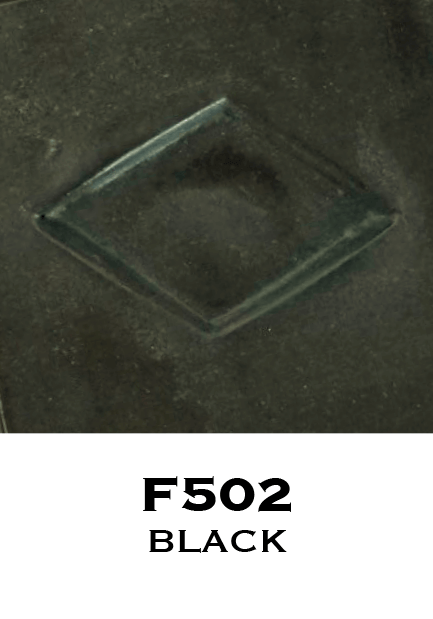
Matt gives the Studio Line palette a quiet, contemporary surface that lets the form and texture of a piece stay visible. F502 Black - Matt Glaze can support independent artists, pottery studios, and ceramic businesses working on one-off pieces or repeatable collections. Pair Matt with Bright for contrast or a satin result; combining it with Vibes can introduce a reactive surface change. At the upper end of the stated range, the Matt surface may read more satin.
Application
Stir well. Apply with a brush, sponge, or stamp in 2-3 coats, allowing each coat to dry before the next. Keep notes on clay body, coat thickness, combinations, and firing when developing a repeatable studio test.
Firing and testing
Supplier guidance lists 1180-1280 degrees C, Cone 4-9. Test F502 Black - Matt Glaze on your clay body before production, including the temperature you intend to use.
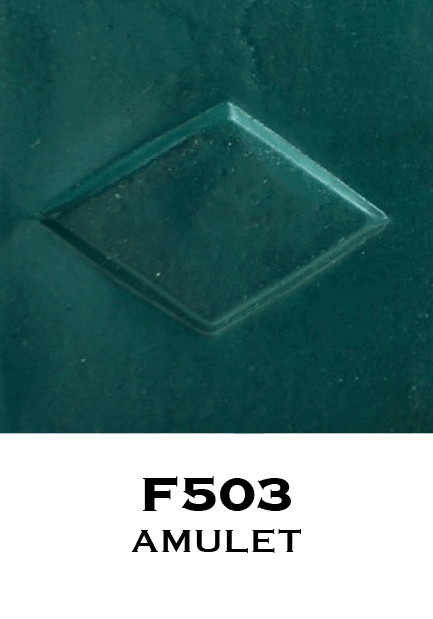
Matt gives the Studio Line palette a quiet, contemporary surface that lets the form and texture of a piece stay visible. F503 Amulet - Matt Glaze can support independent artists, pottery studios, and ceramic businesses working on one-off pieces or repeatable collections. Pair Matt with Bright for contrast or a satin result; combining it with Vibes can introduce a reactive surface change. At the upper end of the stated range, the Matt surface may read more satin.
Application
Stir well. Apply with a brush, sponge, or stamp in 2-3 coats, allowing each coat to dry before the next. Keep notes on clay body, coat thickness, combinations, and firing when developing a repeatable studio test.
Firing and testing
Supplier guidance lists 1180-1280 degrees C, Cone 4-9. Test F503 Amulet - Matt Glaze on your clay body before production, including the temperature you intend to use.
Cone 6 is a starting point for comparison
This group brings together glazes with supplier firing guidance that includes Cone 6. They do not all produce the same surface or require the same schedule. A matte, transparent or crystalline glaze may need different application and firing choices even when grouped at the same cone.
Check more than the target temperature
Read each product's notes for recommended coats, soaking guidance and glaze movement. Heatwork depends on time as well as temperature; test on the clay body and kiln schedule you intend to use.