Choose clear, glossy color for stoneware and porcelain. Compare the Bright collection below, then open a glaze to check its application and firing guidance.
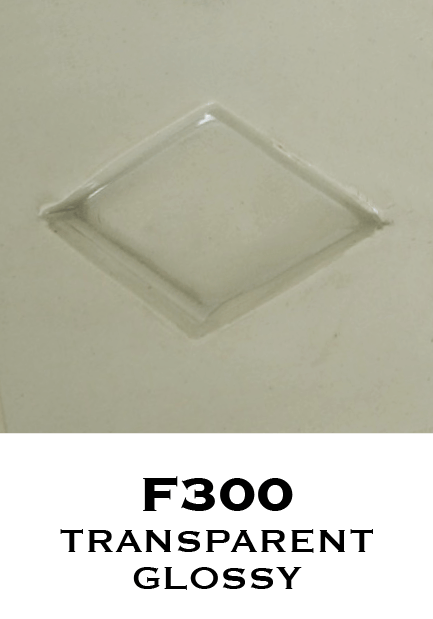
F300 Transparent Glossy is the transparent option in the Studio Line Bright range, with a glossy finish.
Application
Stir well. Apply with a brush, sponge, or stamp in 2-3 coats, allowing each coat to dry before the next. Record the clay body, coat count, and combinations when testing a studio process.
Firing and testing
Supplier guidance lists 1180-1280 degrees C, Cone 4-9. Test F300 Transparent Glossy - Bright Glaze on your clay body before production and compare the fired surface at the temperature and thickness you plan to use.
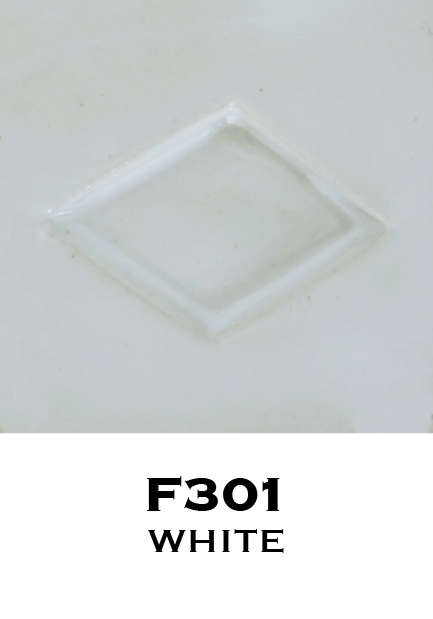
F301 White is a glossy white ceramic glaze in the Studio Line Bright collection. The swatch shows F301 White on its own.
Application
Stir well. Apply with a brush, sponge, or stamp in 2-3 coats, allowing each coat to dry before the next. Record the clay body, coat count, and combinations when testing a studio process.
Firing and testing
Supplier guidance lists 1180-1280 degrees C, Cone 4-9. Test F301 White - Bright Glaze on your clay body before production and compare the fired surface at the temperature and thickness you plan to use.
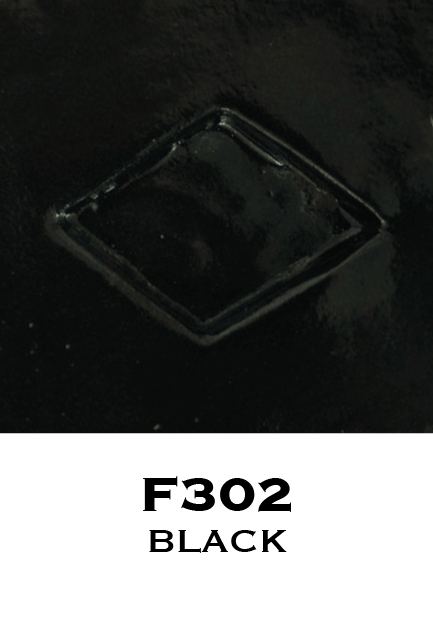
F302 Black is a glossy black ceramic glaze from the Studio Line Bright collection.
Application
Stir well. Apply with a brush, sponge, or stamp in 2-3 coats, allowing each coat to dry before the next. Record the clay body, coat count, and combinations when testing a studio process.
Firing and testing
Supplier guidance lists 1180-1280 degrees C, Cone 4-9. Test F302 Black - Bright Glaze on your clay body before production and compare the fired surface at the temperature and thickness you plan to use.
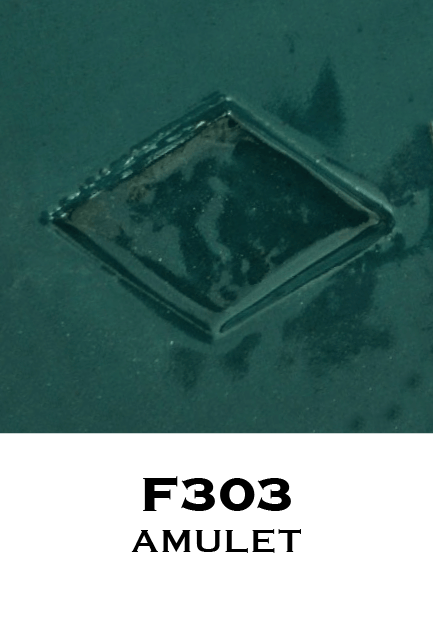
F303 Amulet is a glossy Bright glaze. The supplier's Amulet swatch shows a deep blue-green color; use the pictured sample as a reference for this SKU.
Application
Stir well. Apply with a brush, sponge, or stamp in 2-3 coats, allowing each coat to dry before the next. Record the clay body, coat count, and combinations when testing a studio process.
Firing and testing
Supplier guidance lists 1180-1280 degrees C, Cone 4-9. Test F303 Amulet - Bright Glaze on your clay body before production and compare the fired surface at the temperature and thickness you plan to use.
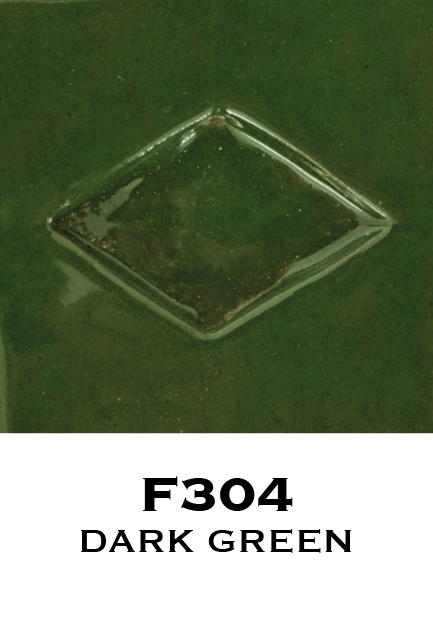
F304 Dark Green is the dark green color in the glossy Bright range, listed separately from F305 Lime Green and F315 Sage.
Application
Stir well. Apply with a brush, sponge, or stamp in 2-3 coats, allowing each coat to dry before the next. Record the clay body, coat count, and combinations when testing a studio process.
Firing and testing
Supplier guidance lists 1180-1280 degrees C, Cone 4-9. Test F304 Dark Green - Bright Glaze on your clay body before production and compare the fired surface at the temperature and thickness you plan to use.
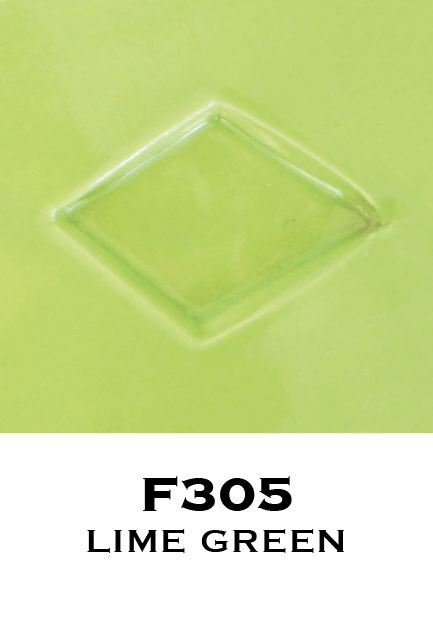
F305 Lime Green is the lime green glaze in Studio Line's Bright collection, with the glossy finish shared by this range.
Application
Stir well. Apply with a brush, sponge, or stamp in 2-3 coats, allowing each coat to dry before the next. Record the clay body, coat count, and combinations when testing a studio process.
Firing and testing
Supplier guidance lists 1180-1280 degrees C, Cone 4-9. Test F305 Lime Green - Bright Glaze on your clay body before production and compare the fired surface at the temperature and thickness you plan to use.
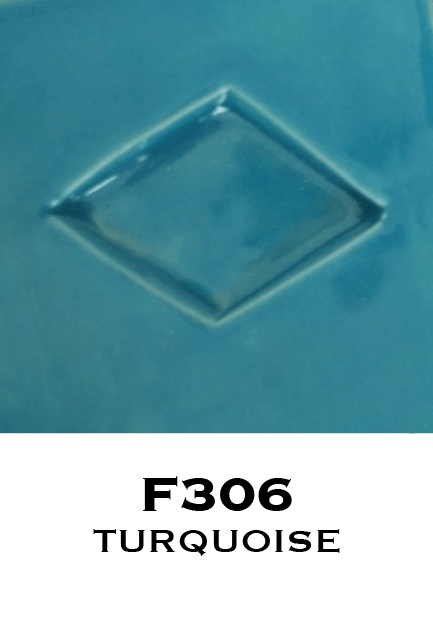
F306 Turquoise is the turquoise color in the glossy Bright collection. Its product swatch shows the individual glaze rather than a glaze mixture.
Application
Stir well. Apply with a brush, sponge, or stamp in 2-3 coats, allowing each coat to dry before the next. Record the clay body, coat count, and combinations when testing a studio process.
Firing and testing
Supplier guidance lists 1180-1280 degrees C, Cone 4-9. Test F306 Turquoise - Bright Glaze on your clay body before production and compare the fired surface at the temperature and thickness you plan to use.
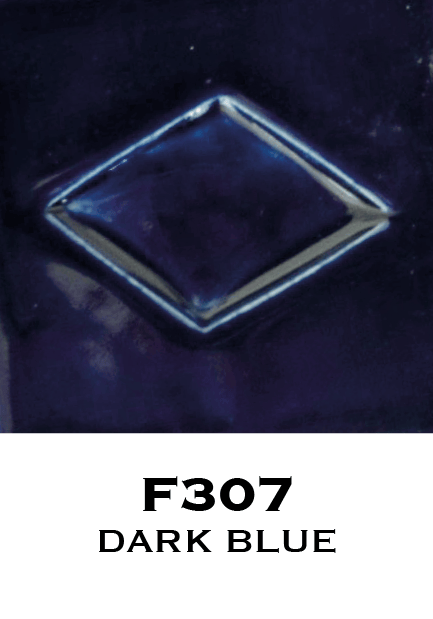
F307 Dark Blue is the dark blue glaze in the Bright range. This is a separate color and SKU from F306 Turquoise.
Application
Stir well. Apply with a brush, sponge, or stamp in 2-3 coats, allowing each coat to dry before the next. Record the clay body, coat count, and combinations when testing a studio process.
Firing and testing
Supplier guidance lists 1180-1280 degrees C, Cone 4-9. Test F307 Dark Blue - Bright Glaze on your clay body before production and compare the fired surface at the temperature and thickness you plan to use.
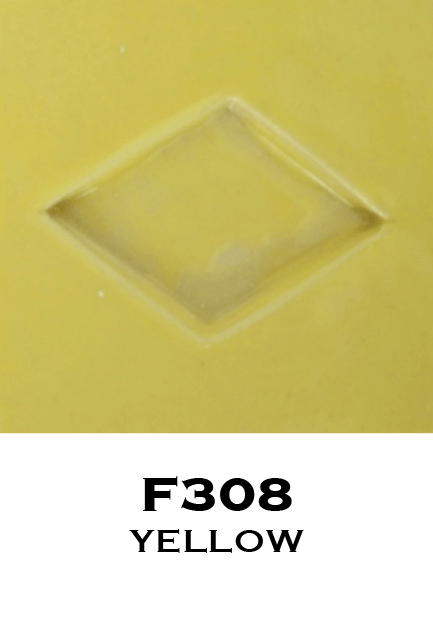
F308 Yellow is the yellow option in the Bright collection of glossy ceramic glazes for stoneware and porcelain.
Application
Stir well. Apply with a brush, sponge, or stamp in 2-3 coats, allowing each coat to dry before the next. Record the clay body, coat count, and combinations when testing a studio process.
Firing and testing
Supplier guidance lists 1180-1280 degrees C, Cone 4-9. Test F308 Yellow - Bright Glaze on your clay body before production and compare the fired surface at the temperature and thickness you plan to use.
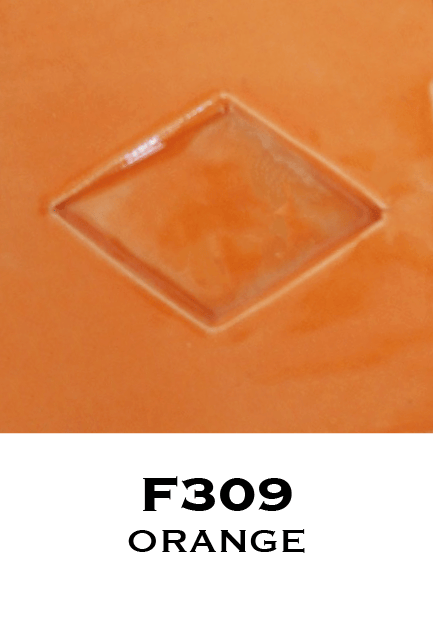
F309 Orange is the orange glaze in the Studio Line Bright range, with a glossy finish.
Application
Stir well. Apply with a brush, sponge, or stamp in 2-3 coats, allowing each coat to dry before the next. Record the clay body, coat count, and combinations when testing a studio process.
Firing and testing
Supplier guidance lists 1180-1280 degrees C, Cone 4-9. Test F309 Orange - Bright Glaze on your clay body before production and compare the fired surface at the temperature and thickness you plan to use.
Cone 4-9 2156-2336 ºF 550Ml bottles Price: $29.95
Price: $29.95
Clear color with a glossy surface
Bright is a transparent glossy collection for artists and studios that want saturated color. The appearance of a transparent glaze depends on the clay beneath it, so compare samples on the bodies you use.
Application and combination notes
Stir well and apply by brush, sponge or stamp. Supplier guidance calls for 2-3 coats, allowing each to dry before the next. Bright colors can be intermixed to explore additional shades. Mixing with Matt can create a satin effect; combinations with Vibes can produce reactive variation.
Test each combination and check the product's firing range before production. Record the clay, application and kiln schedule so you can compare results.